Practical guide · UK → EU goods trade
7 checks UK manufacturers should make before shipping goods to the EU
A practical pre-shipment checklist for smaller UK manufacturers: classification, commercial invoices, origin, preferential tariffs, responsibilities, product requirements and regulatory change.
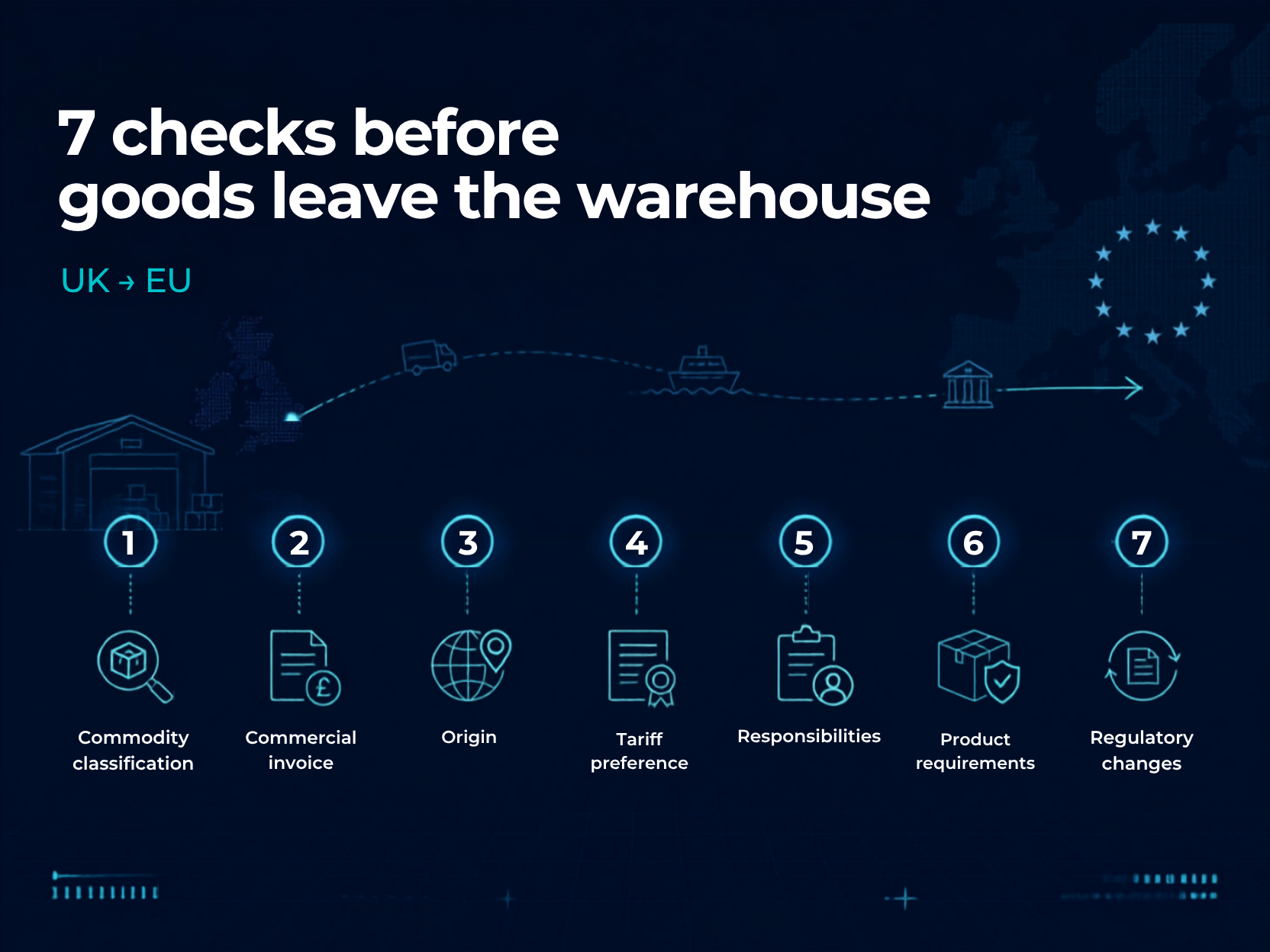
For many smaller UK manufacturers, exporting to the EU is not difficult because information is unavailable. It is difficult because the information is spread across tariff tools, customs guidance, commercial documents, brokers, regulatory websites and internal spreadsheets.
Before a shipment leaves the warehouse, seven checks are worth making consistently.
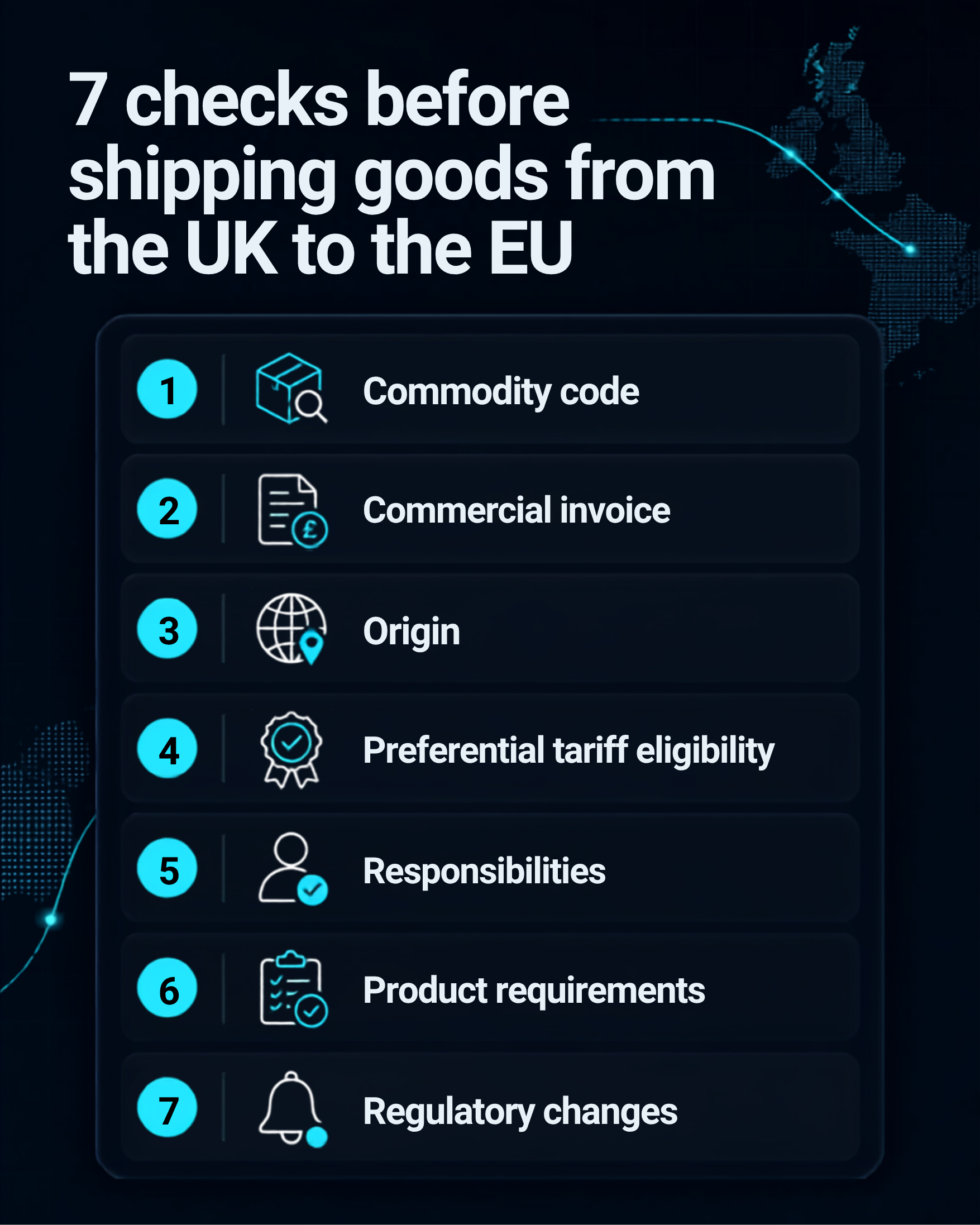
Check the commodity code
Your commodity code affects more than the description used on a customs form. Classification is used to determine customs treatment and can be relevant to duties, licences, restrictions and product-specific requirements.
For manufacturers producing technically similar components, classification deserves particular care. A change in material, function, construction or specification can change the appropriate code.
Make sure the commercial invoice contains the right information
The commercial invoice is a core document in an international goods shipment. GOV.UK guidance notes that a completed commercial invoice and any required licences or certificates should travel with the goods.
A repeatable workflow will typically capture seller and buyer details, a clear goods description, quantity, value and currency, commodity code, origin information and relevant delivery or shipping information. Exact requirements depend on the shipment.
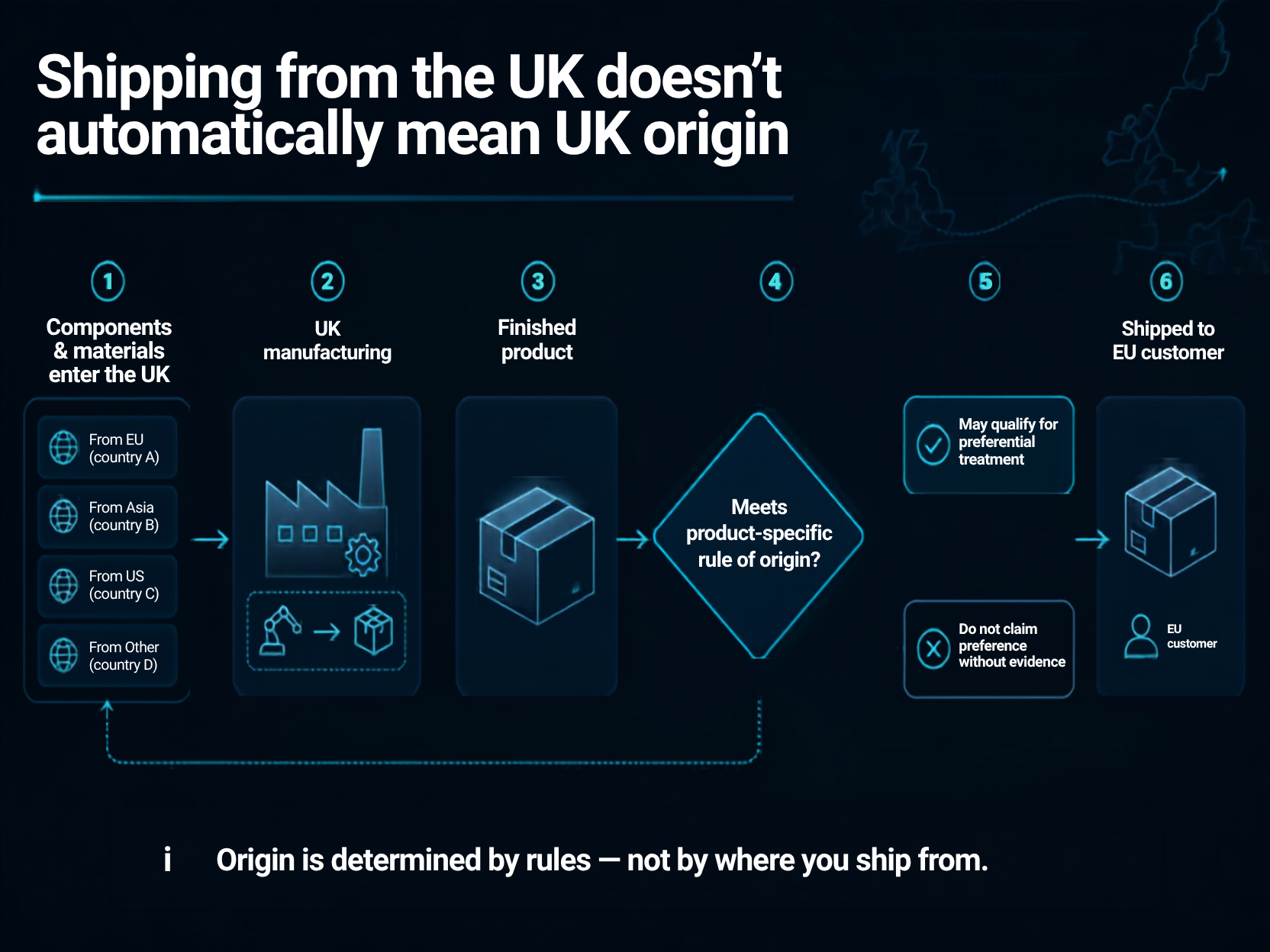
Do not confuse “shipped from the UK” with “UK origin”
In customs, origin refers to the economic nationality of goods, where they are considered to have been produced or manufactured, not simply where they are dispatched from. The European Commission identifies origin, classification and customs value as separate factors in customs treatment.
This matters where a business wants to claim preferential treatment under the UK–EU Trade and Cooperation Agreement. A UK company can use non-UK inputs and still potentially meet an origin rule, but the applicable product-specific rule needs to be checked.
Check whether you can actually claim preferential tariff treatment
The UK–EU Trade and Cooperation Agreement allows qualifying goods to receive preferential tariff treatment, but tariff preference is not automatic merely because a product is exported from the UK.
HMRC guidance says exporters issuing a statement on origin must hold evidence that the goods meet the relevant origin requirements. Supplier information can therefore become important when manufactured products contain imported components or materials.
Before relying on preference, ask whether the product satisfies its origin rule, whether supporting evidence is available, and whether the appropriate proof of origin is being used correctly.
Be clear about who is responsible for what
A shipment can become expensive when seller, buyer, carrier and broker have different assumptions about responsibilities.
Before dispatch, make sure the parties understand who arranges transport, handles export and import formalities, pays duties and import VAT where applicable, supplies customs data and bears risk at each stage.
Check whether the product has additional EU requirements
Customs is only one part of the border process. Depending on the product, exporters may also need to consider product standards, conformity requirements, licences, restrictions, labelling, safety rules, chemical requirements or other sector-specific controls.
The right question is not “What are the rules for exporting to the EU?” but rather: what applies to this specific product in this specific market?
Check whether anything has changed since the last shipment
One of the riskiest assumptions in repetitive trade is: “We shipped this before, so the process is still the same.” Tariff measures, regulatory requirements, sanctions, product rules and customs procedures can change.
Manually checking every government and regulatory website before every shipment is unrealistic for a small team. Having no structured monitoring process is risky too.
Confirm the product classification.
Check origin, evidence and shipment documentation.
Review changes that may affect the goods or workflow.
A more joined-up workflow
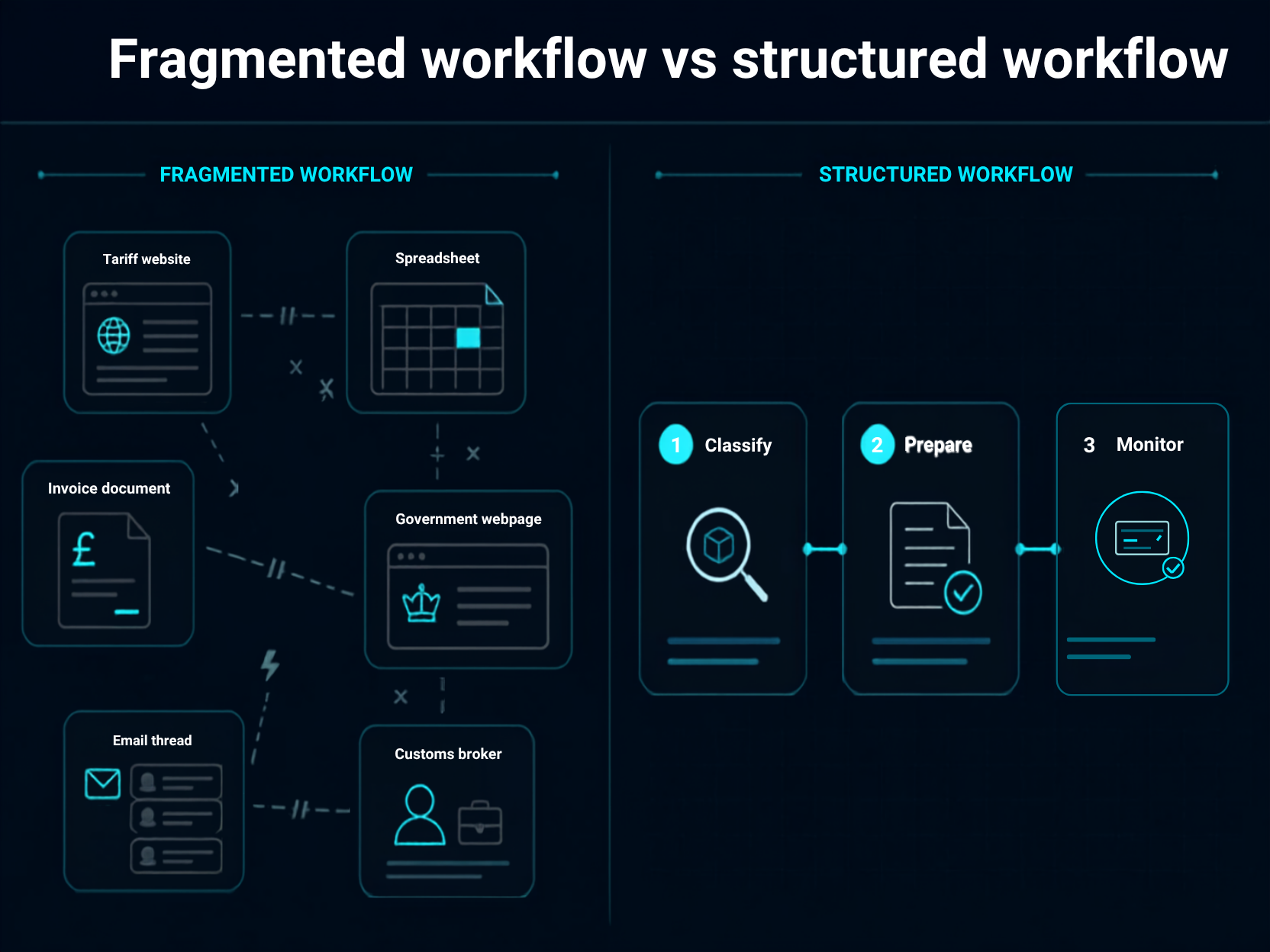
The bigger problem is workflow fragmentation.
For many small manufacturers, none of these tasks is individually impossible. The difficulty is doing them across multiple tariff databases, regulatory sites, spreadsheets, invoices, emails, brokers and internal product records.
Why we built Migr8
Classify. Prepare. Monitor.
Migr8 brings together three practical parts of the UK–EU trade workflow for smaller businesses.
AI-assisted HS and commodity-code research.
Commercial invoices using structured shipment information.
UK–EU regulatory alerts and practical summaries.
Migr8 supports research and workflow preparation. It does not replace official customs guidance, customs authorities, customs brokers or professional advice where required.
Official sources
Further reading
Use the official guidance below as the authoritative source for your specific shipment and product circumstances.
One practical place to begin
Spend less time piecing UK–EU trade compliance together.
Research product classifications, prepare commercial invoices and monitor changing requirements from one place.
7 days free, then £89/month. One plan. All features.